
Congratulations. Your Dashboard May Have a Side Hustle.
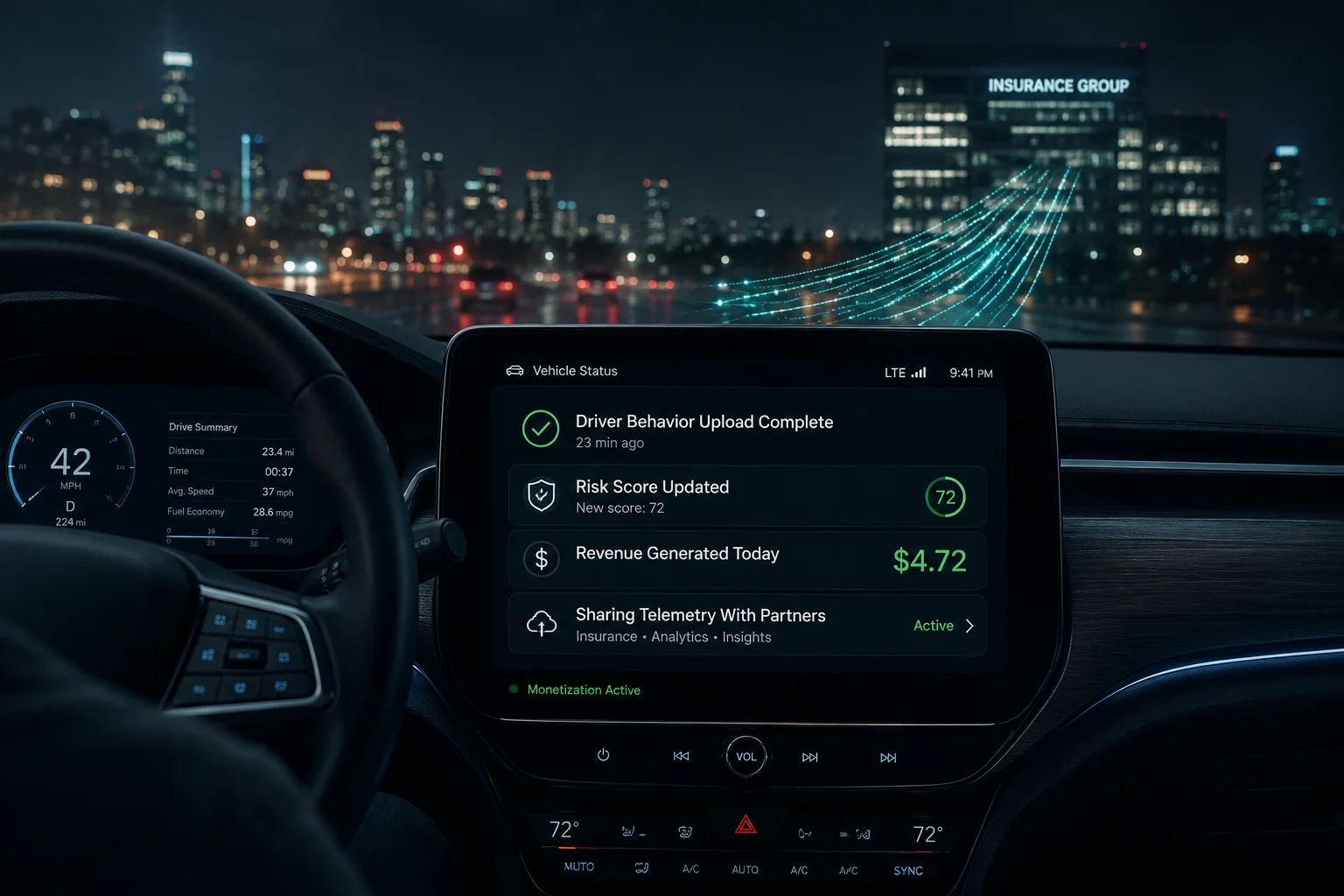
The problem isn't that your car collects data. It's what happens next.
If you drive a modern car, you already know it's probably collecting data. Location. Speed. Braking. Acceleration. App activity. Annoying? Yes. Creepy? Sure. Shocking? Not really anymore.
The GM OnStar scandal is different — because it showed what that data can become after it leaves the car: a consumer-reporting file that insurers can use to price you, judge you, or deny you coverage.
That's the part every car buyer should care about.
GM sold OnStar Smart Driver as a driving coach. Hard braking, speeding, acceleration — maybe useful feedback, maybe not. But according to the FTC, GM and OnStar didn't clearly explain what was really happening. The FTC alleged that GM collected, used, and sold precise geolocation and driving behavior data from millions of vehicles without adequately notifying consumers or getting their affirmative consent. Some location data was collected as often as every three seconds.
That's not a cute driving score. That's a surveillance-grade driving diary.
Here's where it gets consequential. According to the FTC, GM sold driver behavior and geolocation data to consumer reporting agencies, which used it to compile reports about consumers. Those reports could then be used by insurance companies to set rates or deny coverage.
Read that chain slowly: car feature → driving data → consumer report → insurance decision → money out of your pocket.
That is not a privacy-policy footnote. That is a financial consequence.
There's a legitimate debate about usage-based insurance. Some people knowingly install an insurer's app or plug-in device in exchange for a potential discount. They understand the trade. The GM situation was different — the FTC alleged that GM used a misleading enrollment process, and that some consumers didn't realize they'd signed up for Smart Driver at all. Some enrolled while trying to activate roadside assistance.
One is a deal you knowingly made. The other is a deal you may have accidentally clicked into.
The FTC order and a separate $12.75 million California settlement (announced in May 2026) apply to GM and OnStar — not the entire industry. Ford, Toyota, Tesla, Honda, and everyone else did not become bound by the GM order just because GM got caught. Other automakers can read the room, update their flows, and send worried memos to legal. But unless a company is under its own order or state-law obligation, your protection depends on that company's practices and whatever opt-outs are buried in the app or service agreement.
GM also didn't promise to stop collecting all driving data. Connected cars can still transmit data for emergency response and legitimate purposes. The issue was never "no data can ever leave the car." The issue is purpose, consent, and consequence.
Under the FTC's final order, GM must get affirmative express consent before collecting or sharing connected-vehicle data, let U.S. consumers request and delete their data, and allow opt-outs for geolocation and driver behavior collection. Most critically, GM is banned for five years from disclosing that data to consumer reporting agencies.
That last part is the line buyers should focus on. Not "does my car collect data?" but "can that data become part of a report used to price or deny me?"
So before you buy, lease, or activate a connected-service trial, ask the dealer or manufacturer directly:
Is driving behavior data shared with LexisNexis, Verisk, insurers, or data brokers?
Can it be used for insurance pricing or risk scoring?
Can I use navigation, emergency services, or the app without sharing it?
Where, exactly, do I turn this off?
If the answer is "just read the privacy policy," assume the real answer is: we'd rather you stop asking.
The GM scandal isn't a story about data collection in the abstract. It's a story about your car creating consequences outside the car. Your braking becomes a score. Your score becomes a report. Your report becomes a premium increase — and you may not find out until the bill arrives.
Before you sign anything: can what this car collects be used against your wallet later?
All Access Pass
Know what you're buying before you sign
Full annoyance reports for every vehicle — subscription traps, privacy issues, forced nags, and the stuff dealers won't mention.
- Detailed reports for all vehicles in our database
- Side-by-side comparisons across up to 4 vehicles
- Premium articles and analysis
- No auto-renewal — one payment, 3 months of access
Related Articles
Your Next Car Is a Computer. Washington Just Decided Whose Computer Counts.
If you have shopped for a new car in the last year, you have already met the issue, even if nobody used the words “Connected Vehicle Rule.” The salesman talked about the app that starts the car from the grocery lot, the subscription that keeps the maps fresh, the hands-free highway system that wants a camera on your eyes. All of that travels over a modem. That modem is why Polestar is leaving the U.S. market after the 2026 model year, why Volvo got a pass from the same parent company, and why Ford and GM are in a quieter fight with their own customers over insurance data.
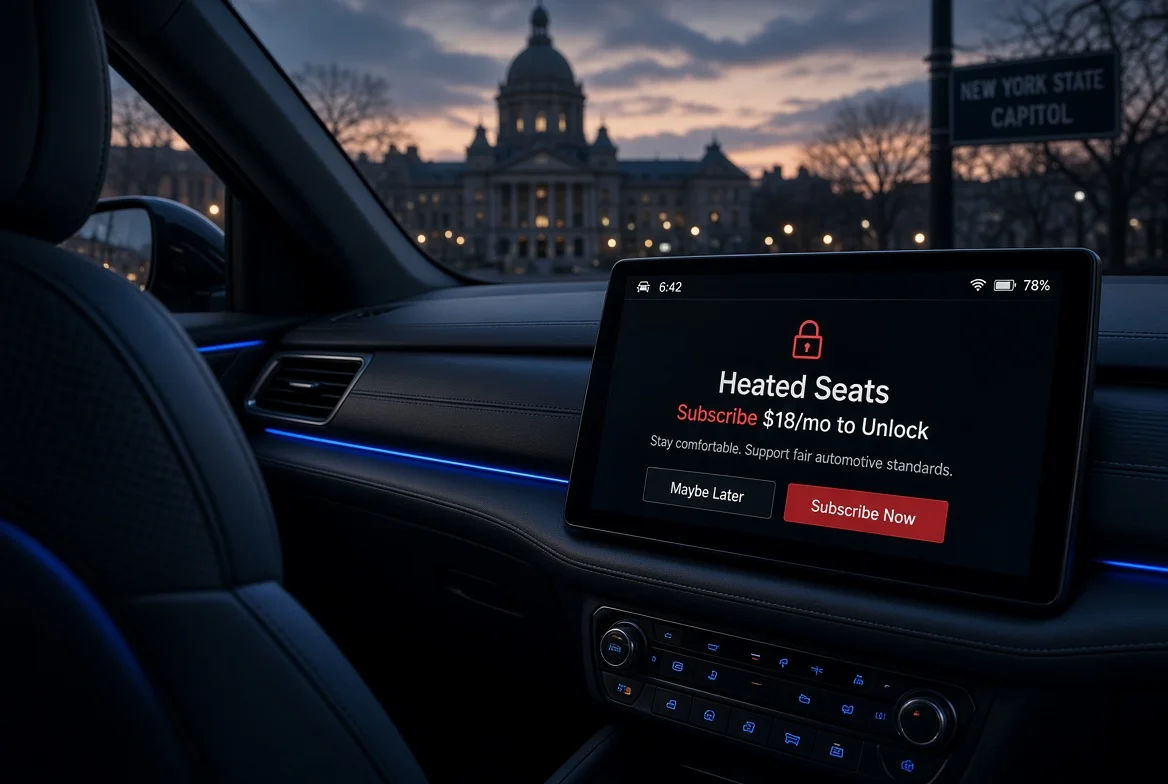
Is Help on the Way for Car Feature Subscriptions?
Last year, New York came closer than any other state to drawing a hard line against one of the most straightforward post-purchase annoyances in modern cars: charging recurring fees for hardware already installed at the factory.
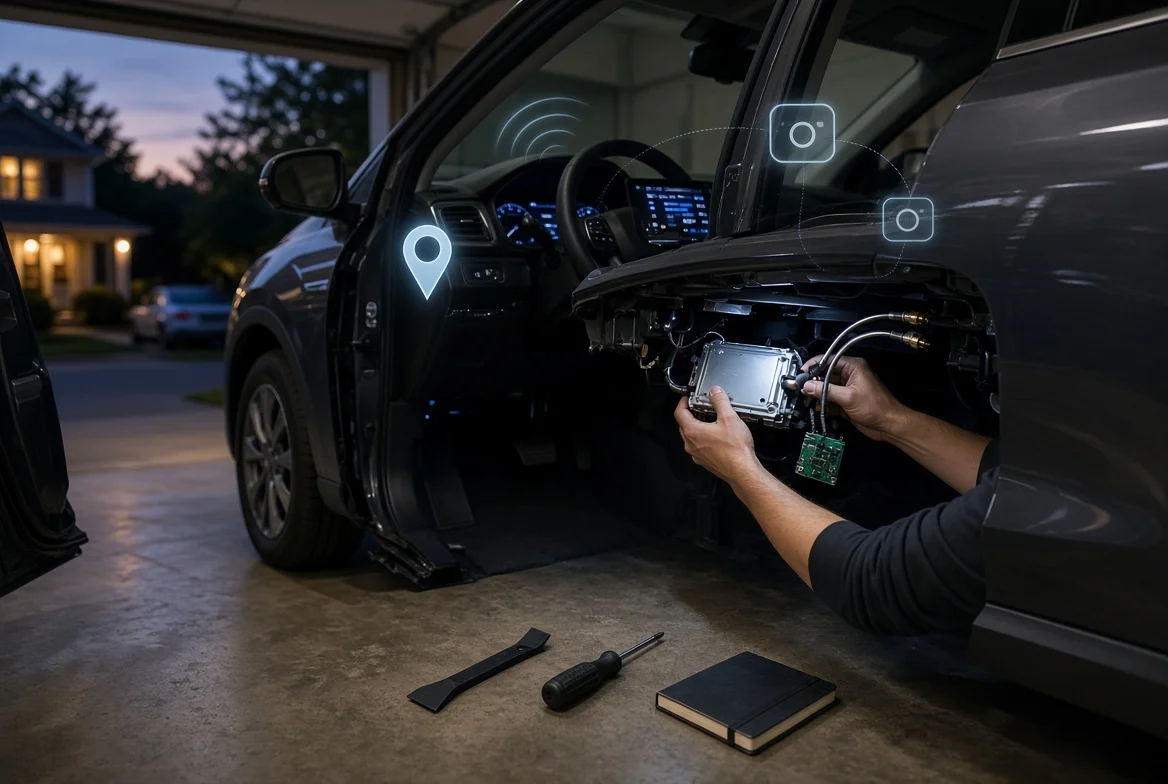
If You Care About Privacy and Subscriptions, Prepare to Get Under the Dash
Modern cars come loaded with features that used to be free or optional and are now locked behind monthly fees, always-on data collection, and systems that can’t easily be turned off. Location tracking, driving-behavior data, cabin cameras, and microphones are common. Heated seats, remote start, advanced driver-assistance functions, and even basic navigation can require ongoing subscriptions.