
The Coming Car-Monitoring Fight Is About More Than Drunk Driving
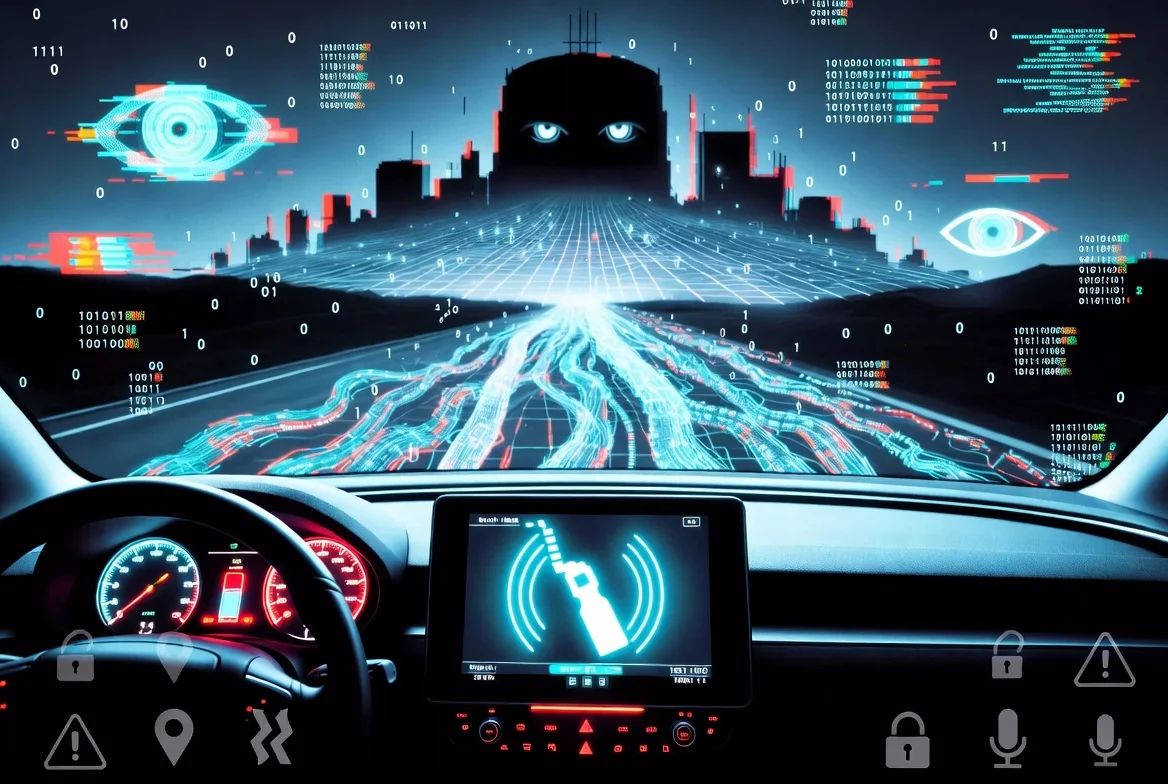
A little-noticed provision in the 2021 infrastructure law has become a flashpoint in the larger debate over how much surveillance Americans should accept inside their cars.
The law, signed by President Biden in November 2021, directs the National Highway Traffic Safety Administration to develop a federal safety standard for “advanced drunk and impaired driving prevention technology.” In plain English: future new passenger vehicles could be required to include passive systems that detect whether a driver is impaired and then prevent or limit operation of the vehicle.
The goal is hard to argue with. Drunk and impaired driving kills thousands of people every year. A reliable system that stops an intoxicated person from driving could save lives. Groups focused on roadway safety have pushed for this for years.
But the details matter. And right now, those details are unsettled.
The law does not specifically mandate driver-facing cameras, facial recognition, or always-on cabin surveillance. It gives NHTSA several paths: technology could passively monitor driver performance, passively detect blood-alcohol concentration, or combine both. That could mean alcohol sensors, steering and lane-behavior analysis, eye tracking, head-position monitoring, reaction-time measurement, or some fusion of all of the above.
The timeline is also widely misunderstood. The original deadline for NHTSA to issue a final rule was November 2024, but the law allows extensions if the technology is not ready. The outer deadline is November 2027. Even then, automakers would generally get two to three more years after a final rule before new vehicles had to comply. So “all new cars must have surveillance in 2027” is not accurate. More precisely, 2027 is the latest statutory deadline for NHTSA to finish the rulemaking, unless Congress changes the law or NHTSA’s process moves differently.
The state of the technology is the real bottleneck. In reports to Congress, NHTSA has acknowledged that passive alcohol-detection technology is not yet ready for a broad federal mandate. Measuring a driver’s blood-alcohol level without a breath test sounds simple until real life intrudes: passengers may be drinking, air flow varies, sensors drift, and false positives could strand sober drivers. Camera-based impairment detection has similar challenges. Drowsiness, disability, illness, medication, distraction, age, lighting, sunglasses, and normal human variation can all affect how a person looks behind the wheel.
That is where the consumer-advocacy concern begins. A narrowly tailored anti-drunk-driving system could be defensible. But a system built to continuously evaluate the driver can easily become something broader: a rolling biometric and behavioral monitoring platform.
Modern cars are already data machines. Depending on the make, model, services enabled, and phone pairing, vehicles may collect or infer:
precise location and trip history
speed, acceleration, braking, steering, and cornering behavior
seatbelt use and airbag events
phone contacts, call logs, messages, and media metadata
voice commands and recordings
infotainment searches and app usage
vehicle diagnostics and maintenance data
driver-assistance engagement and disengagement
camera, radar, ultrasonic, or cabin-sensor data
driver attention, gaze, head position, and hand placement
charging, fueling, tolling, and payment data
identifiers tied to phones, accounts, keys, and subscriptions
Mozilla’s 2023 car-privacy review called connected cars one of the worst product categories it had examined for privacy. AP reported that many automakers reserve broad rights to share or sell personal data, and that consumers often have limited control. AAA has long urged stronger consumer rights around connected-car data.
That history should make regulators cautious. If NHTSA requires impairment-prevention technology, the rule should include privacy guardrails, not just performance standards. Safety cannot be an excuse for open-ended collection.
A consumer-protective rule would require data minimization, local processing by default, strict limits on retention, no use for advertising or insurance scoring, no sale to data brokers, no routine sharing with law enforcement without legal process, clear opt-outs for nonessential connected services, strong cybersecurity testing, and an easy way for owners to see what data the vehicle collects.
Drivers can act now, too. Review the privacy settings in the vehicle app and infotainment system. Decline optional data sharing where possible. Avoid syncing full contacts and messages unless needed. Ask dealers whether telematics can be disabled. Check whether your insurer is receiving driving-behavior data. File privacy requests under state laws such as the California Consumer Privacy Act if applicable. Support groups pushing for car-data rights, including AAA, Consumer Reports, Mozilla, and digital-rights organizations.
The core question is not whether drunk driving should be prevented. It should. The question is whether America can pursue that goal without normalizing permanent in-car monitoring. A good rule would stop impaired driving. Don’t let a safety mandate become the legal and technical bridge from vehicle data collection to continuous driver surveillance.
All Access Pass
Know what you're buying before you sign
Full annoyance reports for every vehicle — subscription traps, privacy issues, forced nags, and the stuff dealers won't mention.
- Detailed reports for all vehicles in our database
- Side-by-side comparisons across up to 4 vehicles
- Premium articles and analysis
- No auto-renewal — one payment, 3 months of access
Related Articles
Your Next Car Is a Computer. Washington Just Decided Whose Computer Counts.
If you have shopped for a new car in the last year, you have already met the issue, even if nobody used the words “Connected Vehicle Rule.” The salesman talked about the app that starts the car from the grocery lot, the subscription that keeps the maps fresh, the hands-free highway system that wants a camera on your eyes. All of that travels over a modem. That modem is why Polestar is leaving the U.S. market after the 2026 model year, why Volvo got a pass from the same parent company, and why Ford and GM are in a quieter fight with their own customers over insurance data.
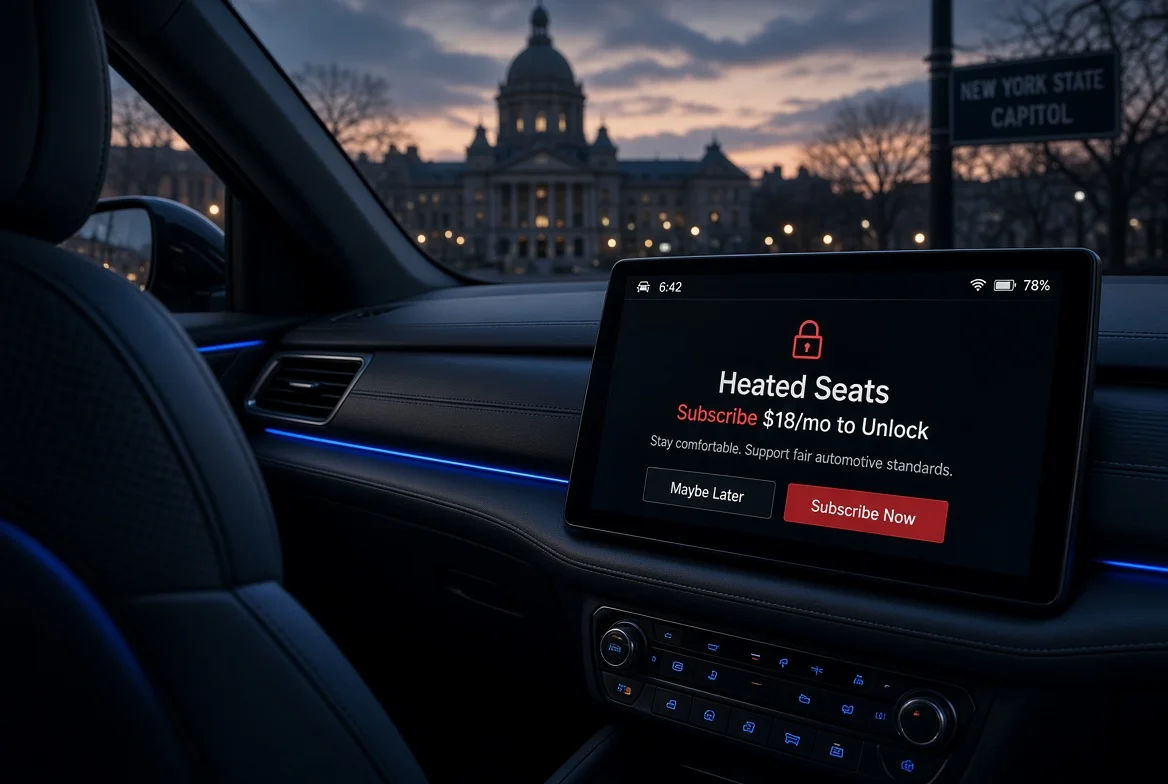
Is Help on the Way for Car Feature Subscriptions?
Last year, New York came closer than any other state to drawing a hard line against one of the most straightforward post-purchase annoyances in modern cars: charging recurring fees for hardware already installed at the factory.
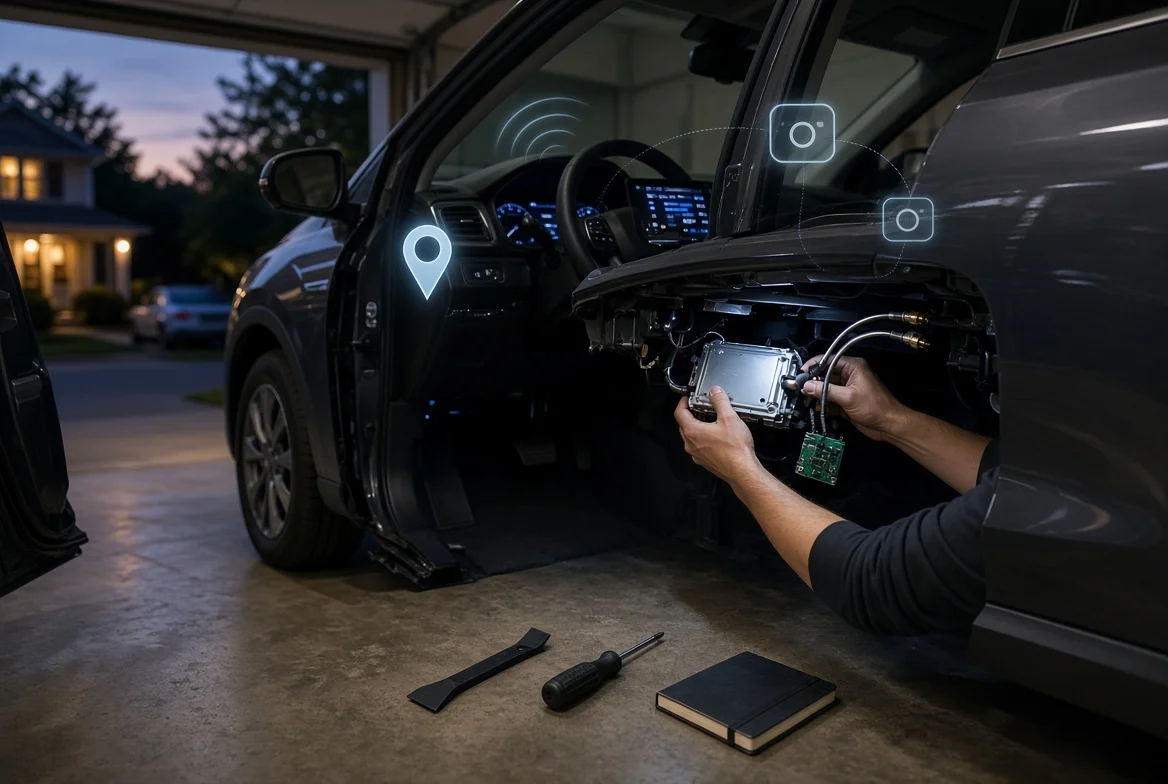
If You Care About Privacy and Subscriptions, Prepare to Get Under the Dash
Modern cars come loaded with features that used to be free or optional and are now locked behind monthly fees, always-on data collection, and systems that can’t easily be turned off. Location tracking, driving-behavior data, cabin cameras, and microphones are common. Heated seats, remote start, advanced driver-assistance functions, and even basic navigation can require ongoing subscriptions.